Katha: catechu in herbal hair colour
What katha is, why this tannin-rich heartwood extract appears in plant hair colour blends and what reviews report about it.
1 min read · Updated 2026-11-14
From khair to katha
The khair tree, Acacia catechu, grows in dry forests across India. Its heartwood is boiled and the extract concentrated into katha, a dark solid that colours paan red. Darker forms, called cutch, were used to tan leather and dye cloth.
Why it colours
Katha is rich in tannins and catechins. Tannins bind strongly to proteins, including the keratin in hair, which is why katha deepens brown shades in plant hair colour. In a blend with henna and indigo it helps soften coppery tones into browns.
What research shows
A 2024 review summarises traditional use in wound and ulcer care and the antioxidant and antimicrobial activity of its compounds. A 2022 review lists catechin, epicatechin and other flavonoids as its main actives. These are laboratory findings; for hair, katha's job is colour.
In Kart Naturals
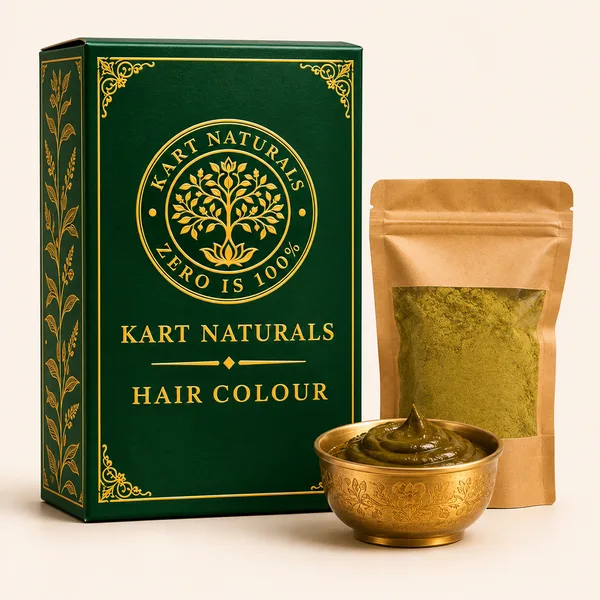
Katha is part of the Natural Hair Colour Kits, alongside henna, indigo, shikakai, brahmi, coffee and rhubarb.
Strand test any hair colour before use, and patch test 48 hours ahead.
Questions
Why is katha in hair colour?
Its tannins bind to hair and add brown depth. It is traditionally combined with henna, indigo and other plant dyes.
Is katha the same as catechin?
Catechin is one of the main compounds in katha. Katha is the whole heartwood extract.
Can I use katha on its own as a dye?
It is usually blended. Alone it gives a weak, uneven brown.
Sources
This guide is general information about traditional and natural care. It is not medical advice. For a skin, scalp or health condition, speak to a dermatologist or qualified practitioner.