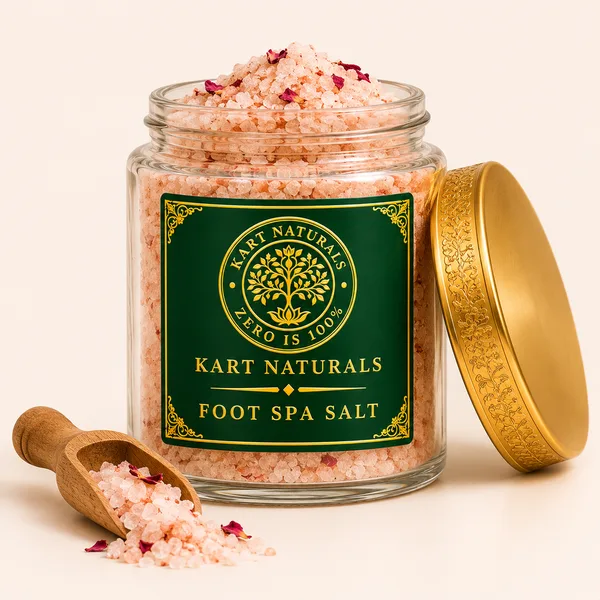
Salt foot soaks: what they do and what they do not
The pleasure and practical benefits of a warm salt foot soak, what a 2017 review found about magnesium absorption through skin, and a simple home ritual.
2 min read · Updated 2026-11-14
The pleasure of a soak
At the end of a long day, a bowl of warm salted water is simple luxury. In Indian homes it has long been paired with a pumice stone and a little oil for cracked heels.
What a soak really does
- Softens hard skin on heels and soles so it can be gently scrubbed.
- Cleanses the feet before oiling or moisturising.
- Relaxes tired feet, mainly through warmth.
The magnesium claim
Bath salts are often sold as a way to absorb magnesium. A 2017 review in Nutrients looked at the evidence for absorbing magnesium through the skin and found it unconvincing; the outer layer of skin has no known magnesium transporters, and absorption might only happen in small amounts through sweat glands and hair follicles. We therefore sell our foot salt for comfort and care, not for magnesium.
A home foot spa
- Fill a basin with comfortably warm water.
- Stir in a handful of foot spa salt.
- Soak for 10 to 20 minutes.
- Scrub heels gently with a pumice stone.
- Pat dry and massage in a rich lotion. Cocoa butter works well here, as a moisturiser.
In Kart Naturals
Tender Foot Spa Salt combines salts with cocoa butter and botanicals.
This guide is general information, not medical advice. If you have diabetes or poor circulation, ask your doctor before soaking your feet.
Questions
Does Epsom salt raise magnesium levels?
A 2017 review found no rigorous evidence that it does through intact skin. Magnesium from food is far more reliable.
How long should I soak?
Ten to twenty minutes in comfortably warm, not hot, water is plenty.
Who should avoid foot soaks?
People with diabetes, poor circulation, numbness in the feet or open wounds should ask their doctor first, because hot water and long soaks can harm skin they cannot feel well.
Sources
This guide is general information about traditional and natural care. It is not medical advice. For a skin, scalp or health condition, speak to a dermatologist or qualified practitioner.